
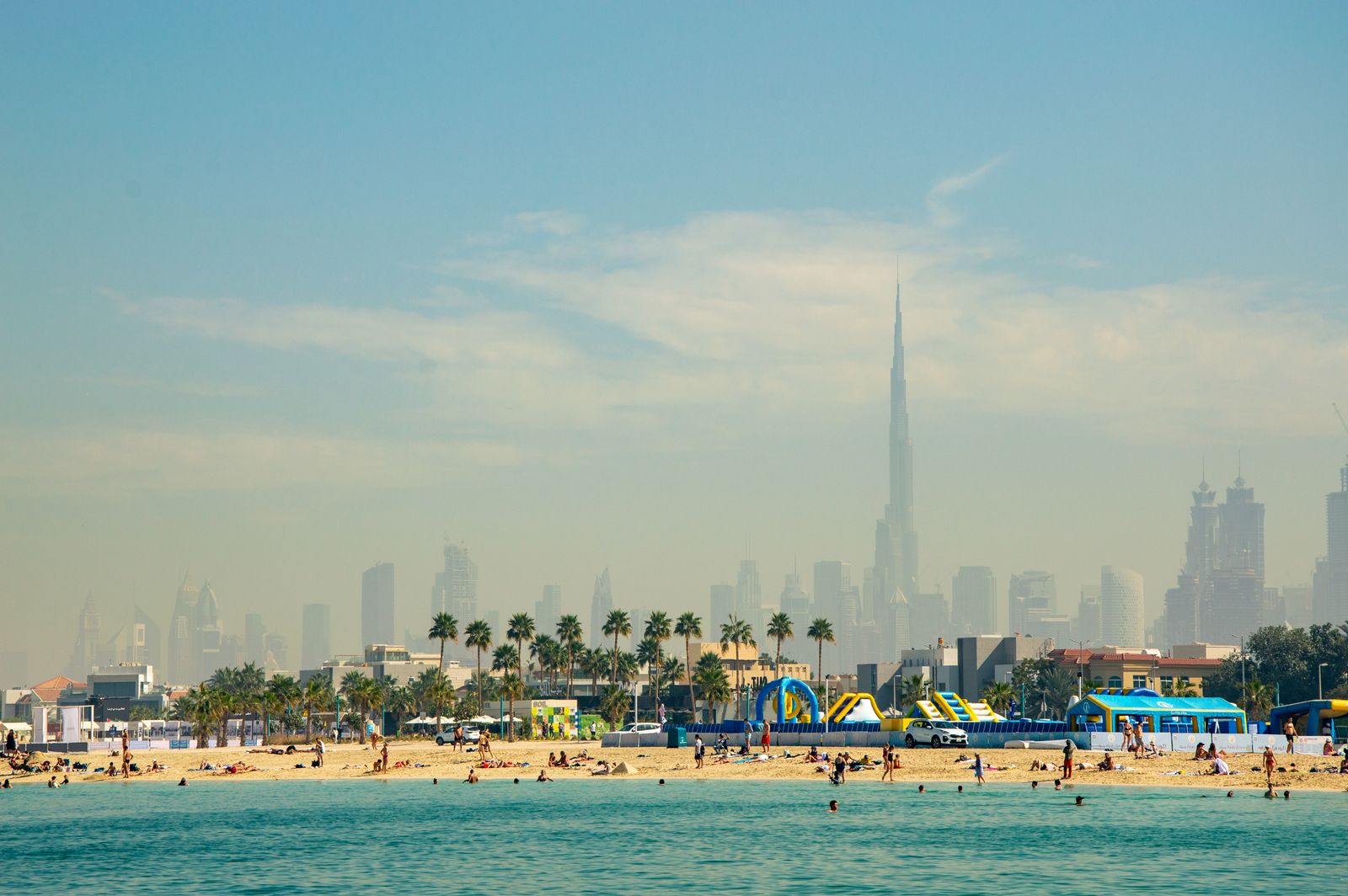
The Best Time to Visit Dubai: A Month-by-Month Weather Guide
Dubai’s climate swings hard across the year — mild enough to explore on foot in January, and past 40°C by July. When you go changes what you should expect from your stay, so here’s a season-by-season breakdown of weather, pricing, and crowds.
November to March: peak season, cool and busy
Highs sit in the mid-20s to low-30s°C, with the lowest humidity of the year outside of a few winter weeks — comfortable enough for walking, beaches, and rooftop dining. It’s also when most visitors come, so apartment and hotel rates run highest, especially around the year-end holidays. The 2025–2026 Dubai Shopping Festival runs 5 December to 11 January, and the city gets noticeably busier and pricier around it — book well ahead if your trip falls in that window.
June to September: hot, quiet, and better value
Summer is Dubai’s low season for a reason: daytime highs regularly hit 40–42°C with high humidity, and outdoor sightseeing mostly moves to early morning or after sunset. In exchange, apartment rates are noticeably softer and the city’s malls, indoor attractions, and pools stay fully usable — a good stretch for travelers focused on shopping, dining, or a quieter, cheaper stay.
April–May and October: the shoulder months
Temperatures climb into the high-20s through high-30s°C — warm, but without summer’s extremes — and crowds and prices sit between the two other seasons. If you want a middle ground, decent weather without peak-season pricing, these are the months to target.
Our take
If comfortable weather is the priority, November through March is hard to beat. If budget matters more and you don’t mind the heat, June to September is where a longer Dubai stay gets more affordable. Whichever season you land in, every ONÓRA apartment comes with 24-hour self-check-in, so your arrival time — or the weather outside — never holds up your stay.